Romanisti · Observation
The Club the City Made
To understand why AS Roma feels different, it helps to begin somewhere other than football.
Rome has a complicated relationship with time.
In most cities, the past occupies designated places. It is preserved behind glass, marked by plaques, contained within museums. The present proceeds around it.
Rome offers no such separation.
Here, antiquity interrupts the commute. A Renaissance palace incorporates ancient stone. Churches rise above temples. Apartment buildings look down upon ruins older than the faith whose bells mark the hour. Streets bend around structures built for a world that disappeared two thousand years ago.
The past is not somewhere one goes in Rome.
It is simply there.
To walk the streets of Rome is to encounter constant evidence that power is temporary, that fashion passes, that institutions disappear—and that certain things, through some combination of care, adaptation, accident and stubbornness, endure.
This may be the most useful place to begin when trying to understand AS Roma.
Not with football, but with Rome.
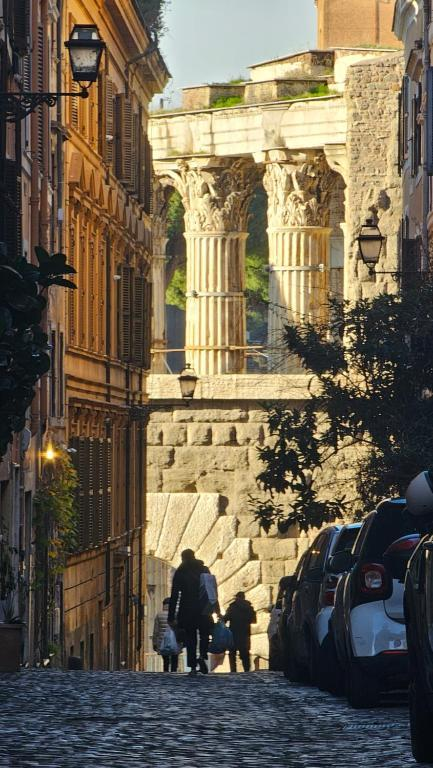
Roma is often described in the familiar vocabulary of European football: a historic club, a passionate support, an underachieving giant, a capital-city institution whose honors do not quite correspond to its stature.
There is truth in all of this. But there is not much explanation.
Such descriptions assume that Roma is best understood by comparing it with other football clubs. Perhaps it makes more sense to compare Roma with the city whose name it carries.
The club was founded in 1927. Rome, by then, had already spent several thousand years accumulating expectations.
A club bearing the name of almost any other city inherits geography. AS Roma inherited mythology.
The wolf on its crest predates the club by millennia. Its colors belong to the city. Its name requires no district, saint, industrial patron or royal designation.
Roma.
Yet the relationship between club and city extends beyond symbols. Its deeper connection lies in temperament.
Rome is magnificent without being orderly.
Its monuments speak of grandeur, conquest and permanence; its daily life often depends upon improvisation. It can seem indifferent to its own beauty while remaining fiercely protective of its identity. It inspires reverence and exasperation, sometimes for precisely the same reasons.
Above all, Rome has an unusual ability to make greatness feel ordinary.
Roma does too.
There have been Scudetti, but not many. There have been seasons when that possibility seemed almost tangible, followed by seasons when the very idea became faintly ridiculous.
None of this has weakened the relationship between club and supporter. Disappointment has instead become part of its history.
Modern football increasingly measures clubs through achievement. League tables establish hierarchy. Transfer spending signals ambition. Champions League qualification validates progress. Success is measured, compared, monetized and displayed.
By those standards, Roma can be frustrating to explain.
Its significance has frequently exceeded its success.
The city does not require comparison to establish importance. A neighborhood does not need international recognition to matter to the families who have inhabited it for generations.
Worth can exist independently of ranking.
Modern football has little language for this kind of worth.
Francesco Totti won one Scudetto with Roma.
Within the accounting system of modern football, the familiar question follows: What might he have won had he left?
It is a reasonable question. It is also an incomplete one.
Totti’s significance lies partly in the decision not to separate greatness from place.
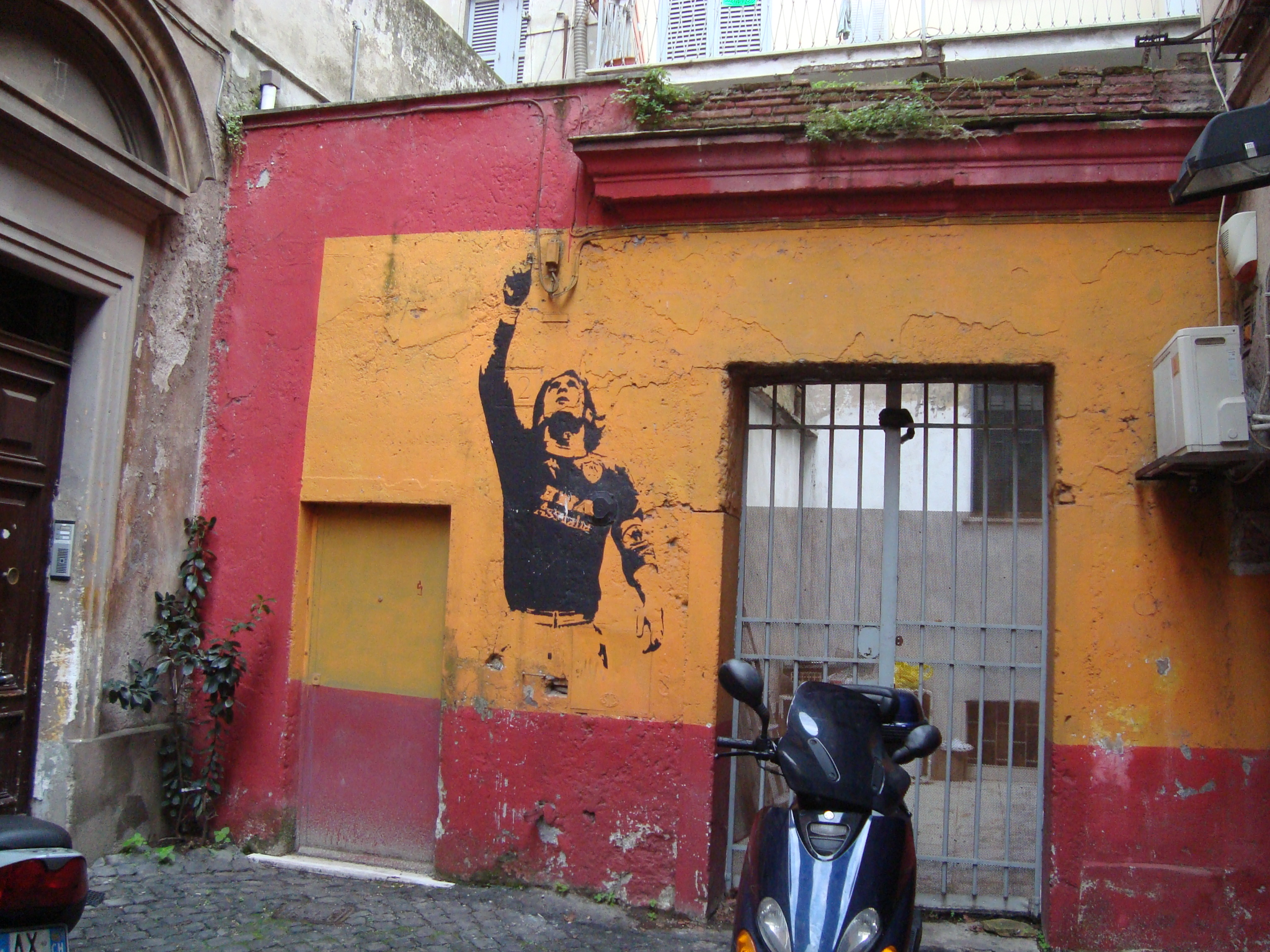
Daniele De Rossi came to embody a similar relationship between player, club and city. In different ways, they made continuity visible.
Rome itself is an argument for continuity.
But continuity is not stasis. Rome has never stopped evolving.
Ancient buildings were incorporated into later ones. Pagan temples became Christian churches. Medieval structures borrowed imperial stone. Renaissance architects built confidently beside antiquity. Baroque Rome added itself to what already existed.
Rome endured not by remaining untouched, but by allowing successive generations to add themselves without entirely erasing what came before.
Preservation, in Rome, has often meant carrying something forward.
A father takes a daughter to the stadio. A chant survives the players who first heard it from the pitch. A scarf belongs to one generation and then another. Stories are repeated until people too young to remember an event carry its memory anyway.
This is how institutions become larger than those temporarily entrusted with them.
Owners, presidents, sporting directors, coaches and players all arrive at some point.
Then they leave.
The supporters remain.
So does the city.
Possession and belonging are not the same thing.
The people who control a football club possess genuine authority over it. But not everything an institution means can be possessed.
Emperors once held extraordinary power over the city.
Rome outlived all of them.
An institution can belong legally to its owners while belonging culturally to a community that preceded them and expects to outlast them.
Ownership, viewed this way, begins to resemble stewardship.
Modern football clubs must operate far beyond the pitch. They are media companies, entertainment properties, hospitality businesses and international brands. Commercial revenue matters. Sponsorship matters. Television rights matter. Digital audiences matter. Facilities matter. Roma cannot compete at the highest level by pretending these realities do not exist.
Nor should it.
Rome offers no argument for standing still.
Change becomes more complicated when an institution derives much of its value from its identity.
A club can become more modern while becoming less itself.
Identity is rarely lost all at once.
A color changes slightly. A symbol is simplified. A tradition becomes inconvenient. Language becomes generic. The supporter gradually becomes a consumer. Decisions that appear perfectly reasonable in isolation accumulate until something once distinctive begins to resemble everything around it.
The city has been restored, rebuilt, beautified, excavated, commercialized, neglected and reinvented repeatedly.
Some interventions became part of Rome.
Others merely happened to it.
Time makes the distinction.
Football is less patient.
A poor month becomes a crisis. A manager represents an era before he has completed ten matches. Owners are asked for three-year plans and judged after three weeks.
Roma participates enthusiastically in this impatience.
Roman radio can compress the rise and collapse of civilizations into the interval between breakfast and lunch.
Romans argue about Roma because Roma provides a language through which Rome can argue with itself.
About ambition and loyalty.
About competence and failure.
About money.
About betrayal.
About whether things were better before.
About whether this time, finally, things might become better tomorrow.
The relationship is not primarily transactional.
Victory intensifies it. Defeat does not dissolve it.
Romanisti want Roma to win. The Curva Sud has never confused resignation with philosophy. There is nothing particularly noble about finishing sixth.
Roma should aspire to greatness.
The most successful clubs in modern football have built enormous international communities around repeated achievement. Roma’s relationship with Rome developed through something older and less efficient: place.
On matchday, the relationship saturates everything.
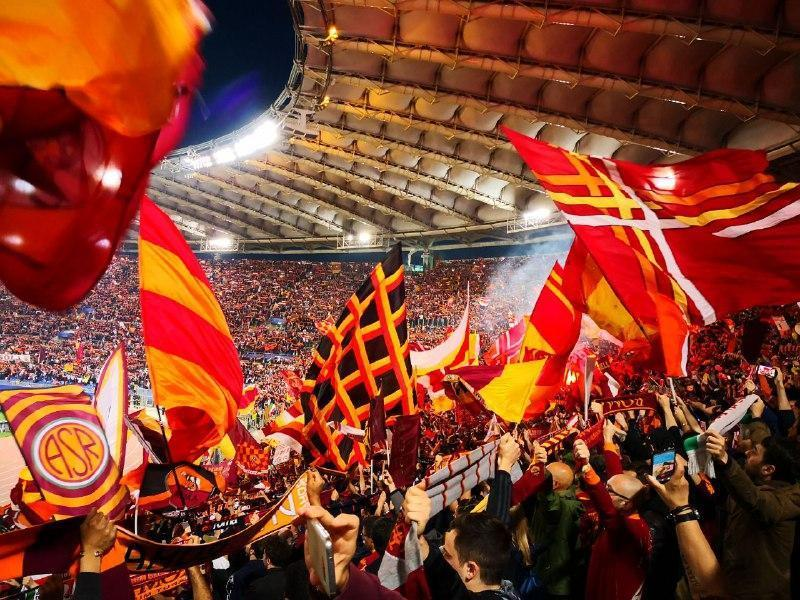
Streets, bridges, bars, scooters, shirts and conversations gradually acquire a common direction. The city seems to gather itself.
Then, for two hours, Rome becomes unusually concentrated.
Its humor is there. Its impatience is there. Its theatricality is certainly there. So are its memory, its contradictions and its impossible expectations.
Occasionally, the football cooperates.
When it does, something happens that statistics preserve poorly.
A goal ceases to be merely a goal. A line of commentary becomes a phrase repeated for years. A player’s gesture becomes an image. A European night attaches itself to a particular spring in the city. People remember where they stood, whom they embraced, which streets they walked afterward.
The event enters memory.
Memory becomes inheritance.
Rome has accumulated itself this way.
Layer upon layer.
The city surrounding the club makes enormous promises simply by existing. Walk through Rome long enough and greatness begins to seem almost like the natural condition of things.
Then Roma happens. A 1–1 draw.
Living among greatness does not guarantee it in the present.
History offers identity. It does not offer competence.
Roma has spent much of its existence negotiating the distance between the scale of its name and the reality of its achievements.
Sometimes that distance disappears.
A Scudetto is won.
A captain lifts a trophy.
A European night begins improbably and ends impossibly.
For a moment, the club seems equal to the scale of the city whose name it carries.
Such moments feel like recognition.
Administratively, it is a football club. It buys and sells players, dismisses coaches, negotiates sponsorships, issues financial statements and tries to win matches.
But underneath those ordinary functions sits an unusual inheritance.
Roma carries the name of a city that has spent millennia demonstrating how permanence is constructed, lost, rediscovered and imagined.
No football club can equal that inheritance.
Perhaps it should not try.
The obligation is smaller, and considerably harder.
To be worthy of it.
Winning is part of that obligation. It must be. An institution devoted to competition cannot treat achievement as incidental.
But victories are not the only thing an institution passes forward.
There is identity.
There is memory.
There is conduct.
There is the relationship between those temporarily entrusted with something and those who will receive it later.
Rome did not endure because it never changed.
It endured because generations believed it worth continuing.
AS Roma is not ancient. It is not inevitable. And despite the language football supporters sometimes use, no club is truly eternal.
But Roma belongs to a city unusually familiar with the aspiration.
Rome existed long before AS Roma.
It will exist long after everyone currently entrusted with the club is gone.
Between those two facts lies the privilege—and the burden—of carrying its name.