Romanisti · Observation
What Makes a Place Home
For generations, Roma has belonged to the Olimpico without the Olimpico ever belonging to Roma.
Gaetano Alegiani began his first Roma season-ticket subscription in 1964, for the Curva Sud, at a time when the club was managed by Juan Carlos Lorenzo and the ticket itself cost 9,000 lira, less than five euros today. Sixty years later, in 2024, well into his seventies, he was still renewing it, one season after another, first on paper and then digitally, through a stretch of history long enough to span multiple stadio eras, multiple ownerships, and a relocation of his own life 140 kilometers away from Rome, to Amatrice, the town his grandfather came from.
He was a few meters from the mayor of Amatrice on the night in August 2016 when an earthquake leveled the town and the house his family had returned to, and he still, somehow, kept renewing. Nothing in that sixty-year record entitled him to any specific patch of the Olimpico. He simply kept showing up, or kept the ticket ready for the seasons he couldn’t, for six full decades, and nobody who knows his story would think to ask whether the seat was his in any deeper sense than that.
The arrangement is stranger than it first appears, and it rewards a moment’s scrutiny. The stadio that holds many of the club’s greatest joys and some of its most bitter grief, the single structure that has absorbed more collective emotion from Romanisti than any other in the city, is not actually the club’s. It never has been, and for sixty years, it has not needed to be in order to mean everything it plainly means to those like Gaetano.
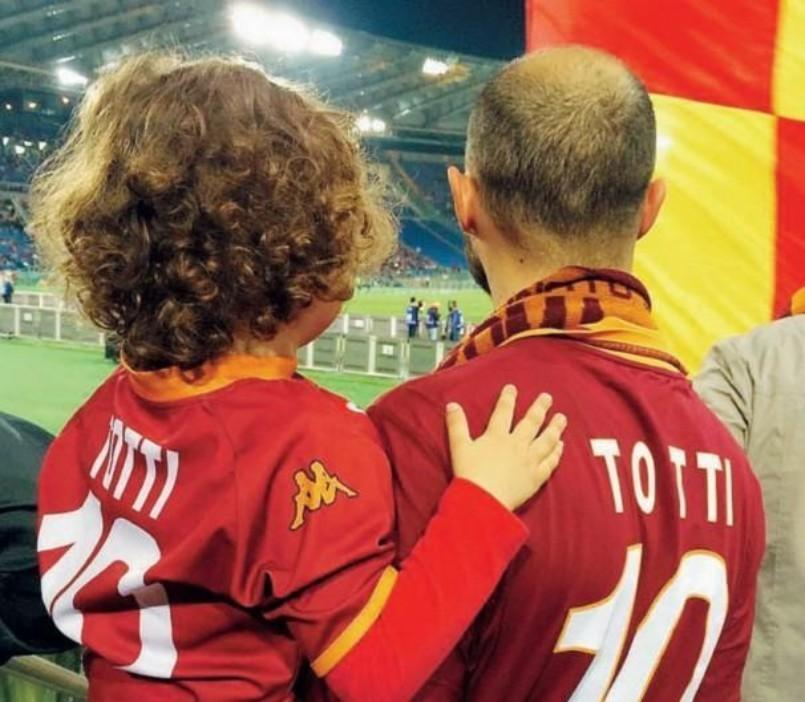
The underlying facts are almost aggressively unromantic once laid out plainly. The Stadio Olimpico began taking shape in the Fascist era under state direction, conceived as part of a far larger vision for the capital that had little to do with either of Rome’s football clubs. It is owned today by Sport e Salute, the state-owned company responsible for the Olimpico and other parts of Italy’s sporting infrastructure, with no particular club allegiance. The club that shares the ground is the capital’s other club, the one that remained outside the consolidation that produced AS Roma in 1927, and the two have coexisted inside the same rented building for the better part of a century, taking turns rather than dividing ownership.
Whatever gets sung, wept or chanted into that concrete bowl on a given night, none of it alters who actually holds the title to the ground beneath it.
Nor, apparently, has that mattered very much.
Consider the night in April 2018 when Roma, three goals down from the first leg, beat Barcelona 3-0 at the Olimpico to complete one of the most improbable comebacks in the competition’s modern history. The noise that evening has since taken on a life of its own, retold by people who witnessed it and, almost as often, by people who only experienced it secondhand. By any reasonable measure it was one of the club’s defining nights, built out of belief that had nowhere else to live except in the hearts of the most hopeful Romanisti.
And still, the building itself remained precisely what it had always been: borrowed, shared and legally indifferent to what had just happened inside it.
A place can be used long enough to absorb the shape of the people who return to it. The Olimpico has absorbed the shape of Roma’s history so completely that supporters rarely have reason to question the arrangement. It remains, at bottom, a loan rather than a possession.
Gaetano’s sixty years suggest that possession was never really the variable that mattered.
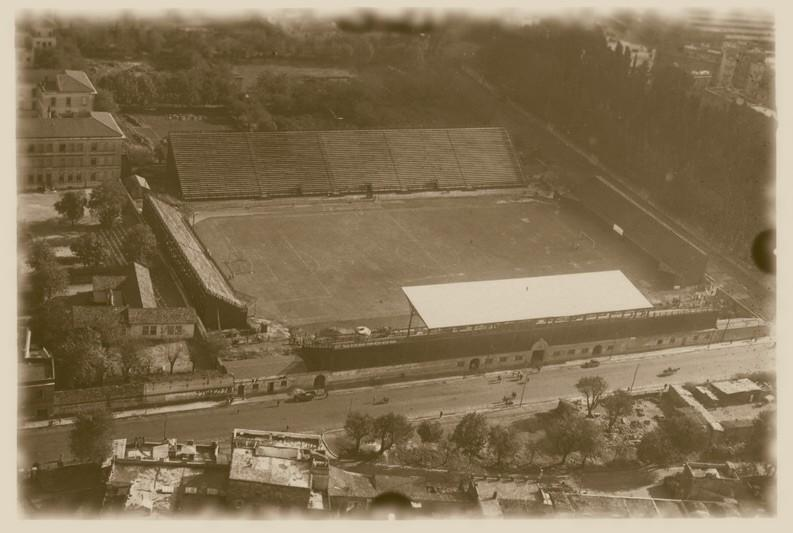
In that respect, the Olimpico continued a relationship between Roma and home that had existed almost from the club’s beginning. Campo Testaccio is remembered as Roma’s first stadio of its own, and rightly so. The club built it, played there and made it inseparable from its early identity. But the ground beneath it belonged to the city. Roma held the land under lease.
The distinction feels almost incidental because it had so little to do with what Campo Testaccio became. Romanisti did not need ownership of the parcel beneath their feet to make the place theirs. Roma left in 1940. The stadio disappeared. More than eight decades later, Campo Testaccio remains one of the most evocative names in the club’s history.
Home, it seems, had already proved capable of surviving the paperwork.
Roma is hardly the only club in Europe to play its biggest matches on a pitch it does not own. Shared and state-held grounds are common enough that the fact alone would not distinguish the Olimpico from similar arrangements elsewhere on the continent. What makes Rome’s version distinct is the specific company it keeps.
The sharing arrangement is with an old and pointed rival. The ground itself remains in public hands, while Roma emerged from an attempt, under Fascism, to consolidate Roman football into a club capable of representing the capital. Nearly a century later, it is still, in a narrow but genuine sense, playing its home matches inside someone else’s building.
For the first time in a long while, the possibility of changing that arrangement has begun to acquire real dimensions rather than existing as another indefinite Roman promise.
In February 2026, Rome’s city government approved a proposed resolution concerning the new Stadio di Pietralata, moving the project another formal step through a process already marked by decades of stalled sites and shelved proposals. The plan under review calls for a ground seating 60,605, with the new Curva Sud, a single stand of 23,000 among the largest of its kind in Europe, and a total investment from the club of roughly €1.05 billion. Further work remains, and nothing about the project is yet guaranteed.
But the proposal has acquired something previous versions repeatedly struggled to achieve: specificity. A site. A seating figure. A budget. Formal government action.
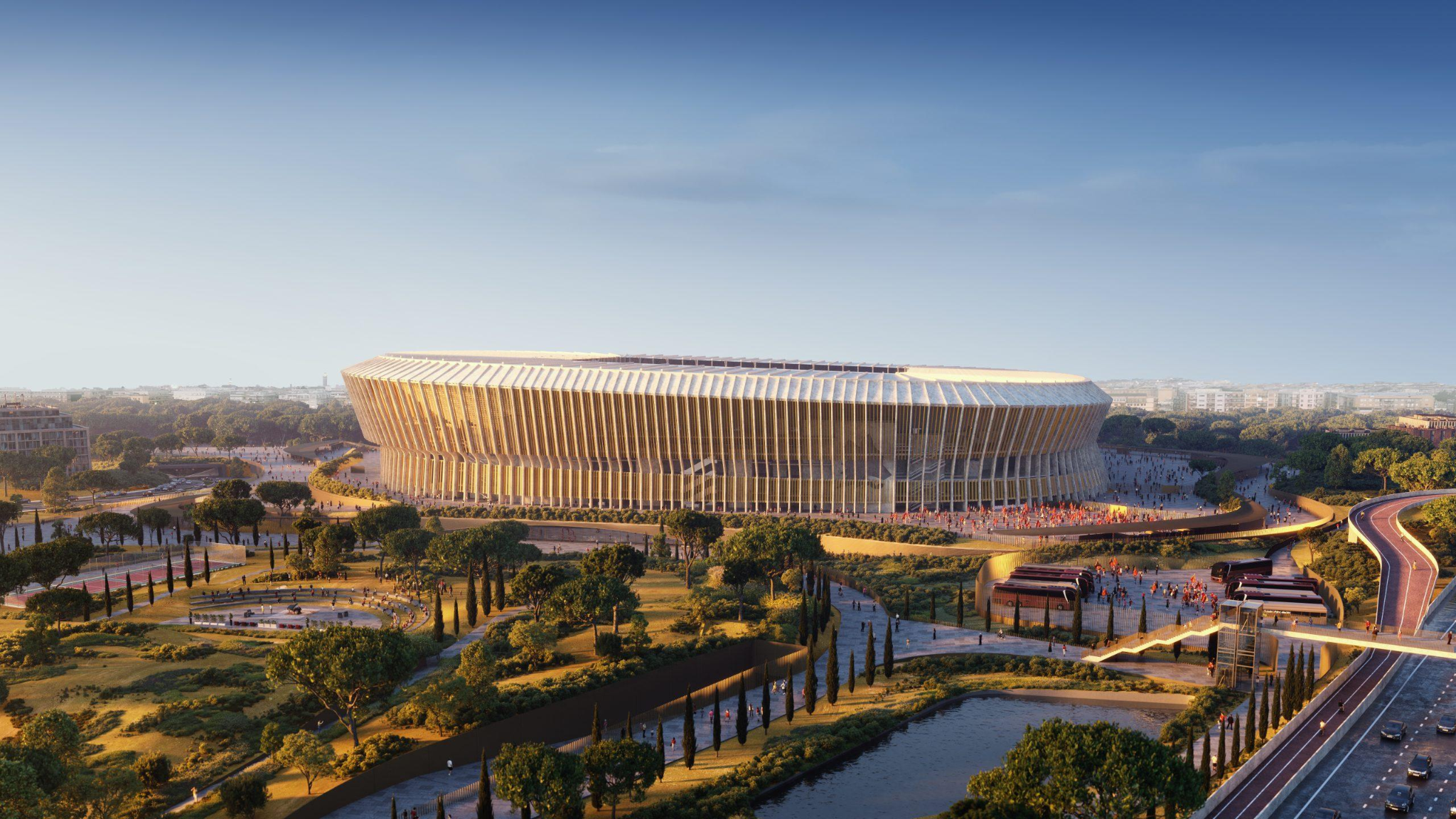
The project has always been about something more particular than Roma needing a better stadio. It offers the possibility of something Roma has not known since Campo Testaccio: a home conceived specifically for the club, built around it rather than adapted to an arrangement that already existed.
There is precedent for this kind of patience, and it runs considerably deeper than football.
The Circus Maximus, the city’s original and largest arena, spent centuries with much of its vast seating constructed in wood. Fires damaged it more than once, including the great fire that swept through Rome under Nero in 64 CE, and each rebuilding returned the Circus to use without yet producing the monumental form that would become known. Only with Trajan’s restoration in 103 CE did the Circus finally acquire the great marble-faced form that Romans would come to think of as eternal, a place that had, in truth, spent centuries becoming the monument history remembers.
Permanence, in Rome, has rarely been the starting condition. It is something arrived at, eventually, and often only after generations have learned to live with what came before it.
The city offered a smaller, far more recent example of the same lesson only months ago. In December 2025, a new station finally opened on the Metro C line beside the Colosseum, the culmination of a project that had been underway, in one form or another, for decades. For years the line advanced slowly, and nearly every new stretch of tunnel seemed to surface something the engineers had not planned for: another layer of a city that had simply never stopped building on top of itself.
What might easily have been remembered only as a long and occasionally exasperating wait became, instead, the raw material for something no other city could plausibly have produced. The station that finally opened is not merely a station. It is an underground museum built directly into the daily commute, with the very finds that slowed construction now displayed along the platforms where the delays themselves used to be, a piece of infrastructure that manages to be at once entirely functional and entirely unrepeatable anywhere else on earth. The long road did not simply arrive somewhere, eventually. It arrived somewhere better than a shorter road ever could have.
Neither example is a promise about when the new stadio might finally rise. But they are worth carrying into that particular uncertainty, especially now that the project has begun to acquire real dimensions, if only as a corrective to the instinct to read decades of delay as decades of failure.
A long provisional existence does not prevent something from becoming permanent. A stadio that takes decades to arrive is not, by that fact alone, a stadio going wrong.
Rome has been waiting for things longer than Roma has existed.
For Roma, that is at least a more reassuring way to think about the wait.
The club has spent almost its entire existence demonstrating that home and ownership are not synonyms. At Campo Testaccio, Roma built its own stadio on land it did not own. At the Olimpico, it inherited a stadio it neither built nor owns and made that home too. The new stadio, if and when it comes, will not invalidate either place. It will add another answer to a question Roma has been asking almost since its beginning: what, exactly, makes a place home?
Perhaps that is the real inheritance of spending all these years in borrowed places. Not a grievance, but something closer to fluency. Roma learned early that belonging was never going to be settled by a deed. It gets settled instead by returning, faithfully, decade after decade if necessary, until the distinction between borrowed and home becomes difficult to see from the inside.
Sixty years into a season-ticket subscription that neither earthquake nor relocation had managed to interrupt by 2024, Gaetano did not need the deed to the Olimpico to know what the place meant to him.
Ownership, in his sixty years of evidence, was never really a matter of paperwork.
It was a matter of returning.
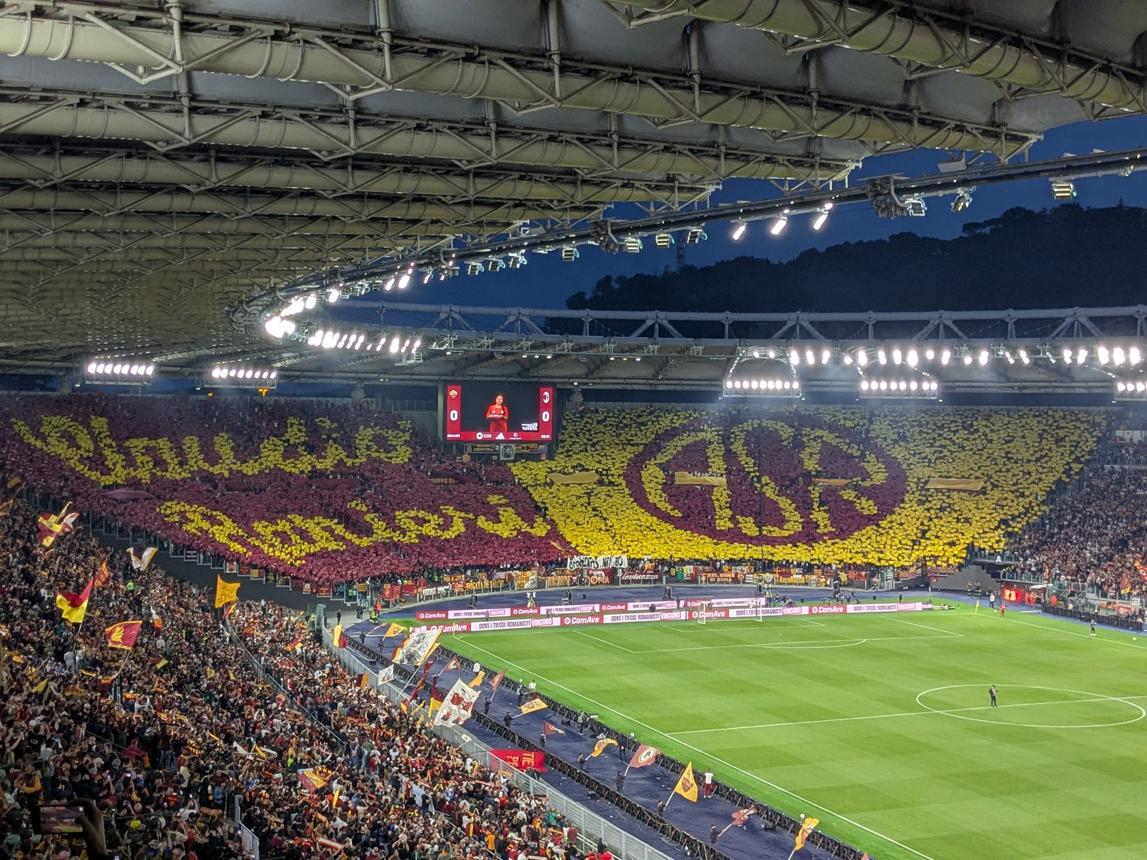
The new stadio may finally give Roma something it has not known since Campo Testaccio: a home designed from the beginning around the club itself.
But those earlier homes have already demonstrated the stranger truth.
A place does not have to belong to you before you can belong to it.