Romanisti · Observation
The Invisible Map of Rome
Every Romanista finds a way to Roma.
On matchday, there is no single road to the Olimpico.
Romanisti approach from across Rome and far beyond it. Some begin only a few streets away. Others begin their journey hundreds or even thousands of miles from the city.
For many, the final approach eventually becomes a walk.
Public transport carries people only so far. Cars encounter matchday traffic and parking. Streets around the Foro Italico begin to fill. Somewhere along the way, people who began their journeys separately start moving in the same direction.
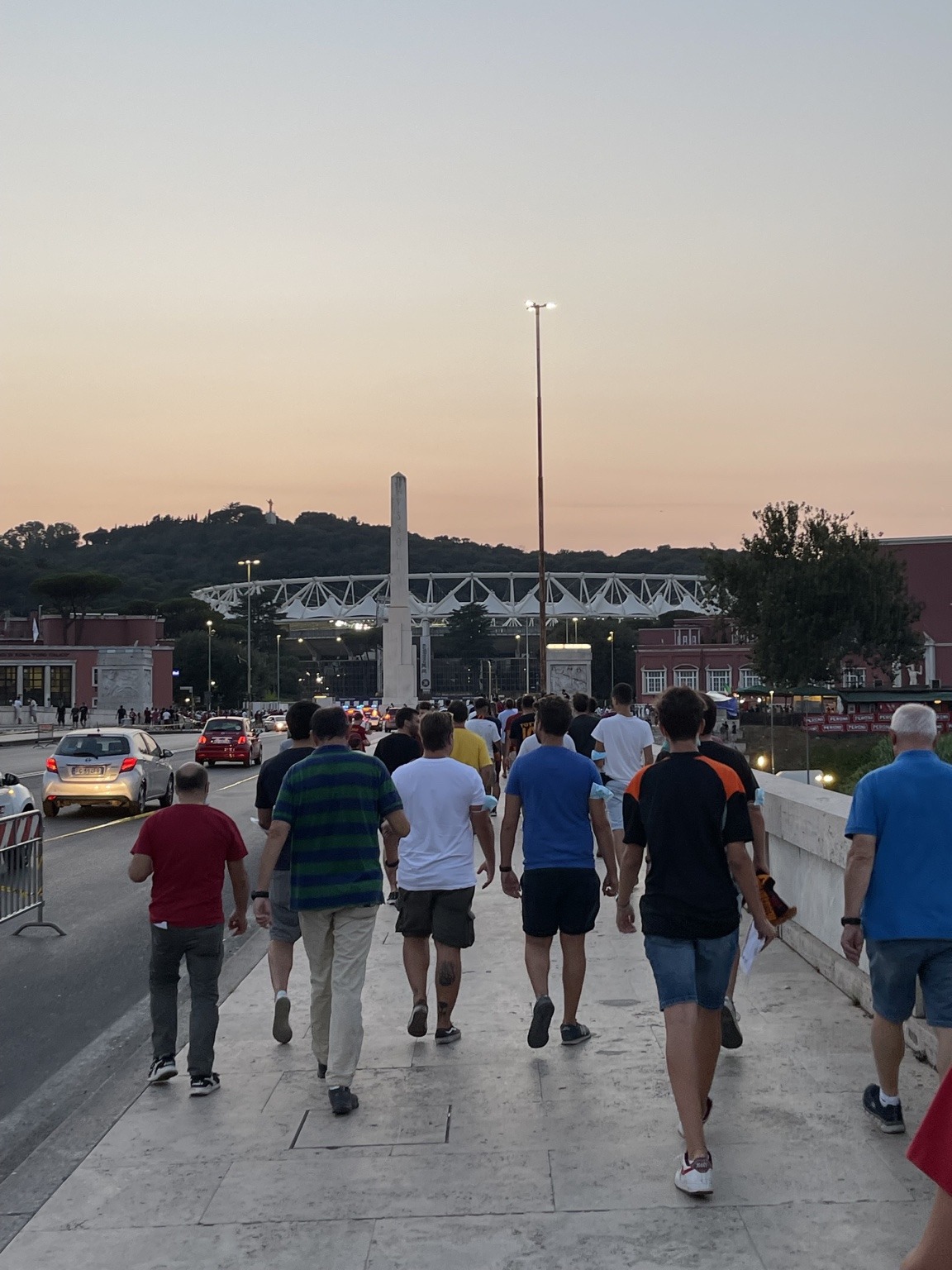
The change is gradual.
A scarf appears.
Then another.
A bar has Roma on the television. Shirts become more common. Vendors occupy familiar corners. Small groups become larger ones. The closer the Olimpico gets, the less anyone needs to ask where everyone is going.
For some, the Tiber marks the transition.
Thousands have crossed Ponte Duca d’Aosta on the way to Roma. Others approach across Ponte della Musica. The bridges belong to the city and serve purposes having nothing to do with football. But on matchday, for those who use them, they become part of the journey.
From the Vatican side of the river, there is no bridge at all.
What matters is not that Romanisti take the same route.
They do not.
It is that, for a few hours, all of those different routes begin pointing toward the same place.
Near the Foro Italico, the distinction becomes harder to see. People who left from opposite sides of Rome now walk beside one another. Someone who lives twenty minutes away can enter the same stream as someone who crossed an ocean to be there.
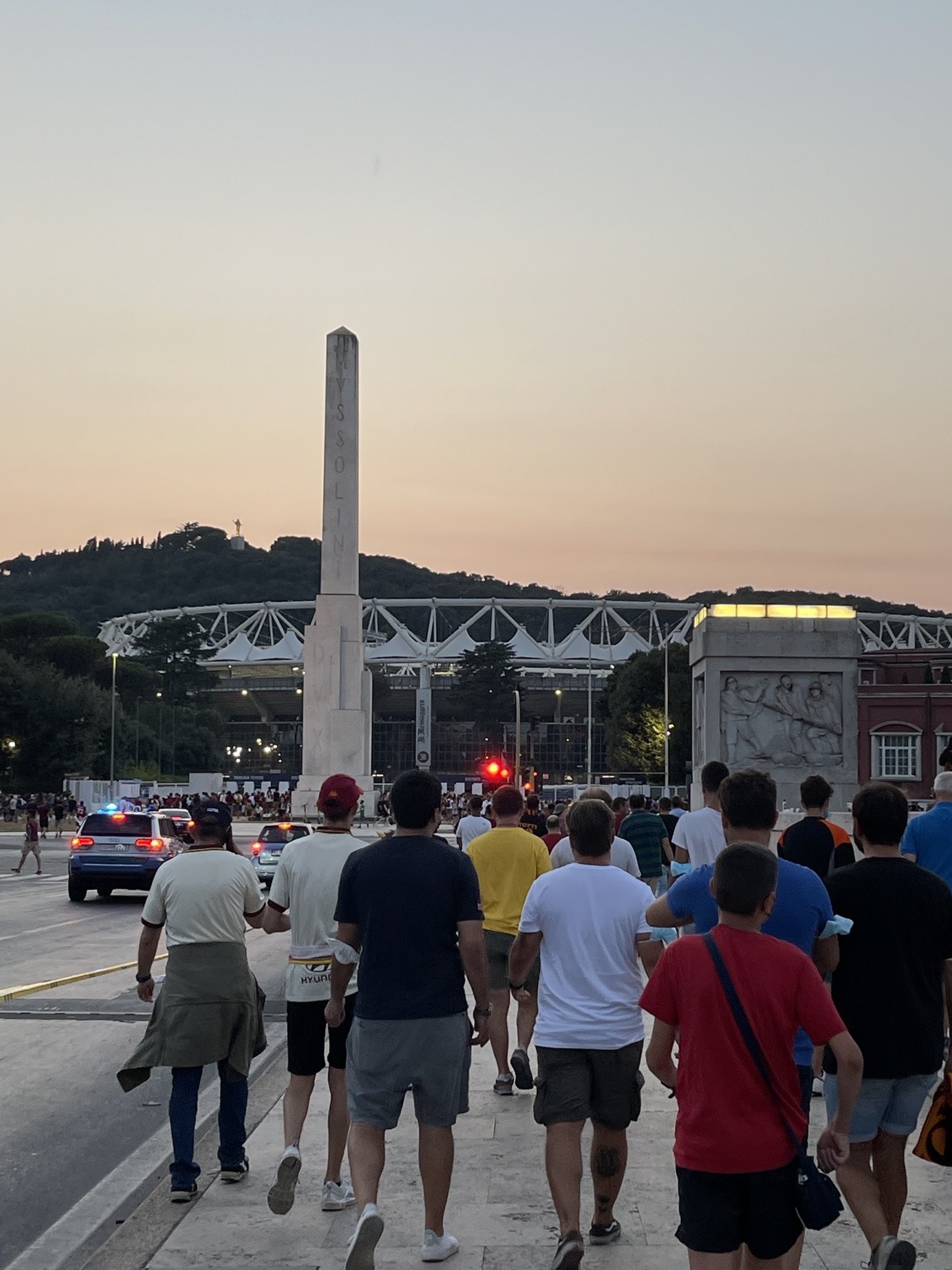
The destination is shared.
The route is personal.
Take this Metro. Leave the car there. Cross here. Meet outside that bar. Eat at this restaurant. Walk from this corner.
Then do the same next time.
And then again.
Eventually, practicality begins to acquire memory.
The café is no longer simply a café. It becomes the place to meet before Roma. A bridge is no longer only a way across the river. It is where the stadio begins to feel close. A restaurant becomes associated with those who are now friends, matches that will never be forgotten, seasons that still stand out.
None of this appears on a map.
The streets are there.
The bridges are there.
The bars and cafés are there.
What they have come to mean is not.
And on every matchday, thousands of people begin drawing it again.
Years pass.
The same tables fill before Roma. Familiar faces appear. Someone who once joined occasionally is now expected. Children are brought along. Newcomers arrive knowing where to meet without necessarily knowing why this particular place was chosen in the first place.
At some point, reservations are no longer required.
To much of Rome, these places remain every bit a part of the matchday as the match itself. Matches have been anticipated there. Defeats have been argued over there. Victories have been savored there. Friendships have blossomed around their tables.
A certain street corner might as well be a Romanisti waiting room. A stretch of pavement becomes a pedestrian merge lane. For those approaching across the Tiber, a bridge can mark the point at which individuals become tifosi.
Not every Romanista shares these places.
There is no canonical bar before Roma. No required restaurant. No single corner at which everyone meets. Even the routes toward the Olimpico divide before they converge.
One person’s map can pass directly through a place that does not exist on another’s.
But the maps overlap.
Generations have crossed the same bridges. Crowds have moved along the same streets. Different groups have occupied the same tables at different times. Habits learned from one person are passed to another.
The bridge remains a bridge.
The café still serves caffè.
The street keeps its name.
Only the meaning has accumulated.
For a little while, the routes disappear.
The bridge has been crossed. The table has been left behind. The walk is over.
Thousands of journeys that began separately have arrived at the same place.
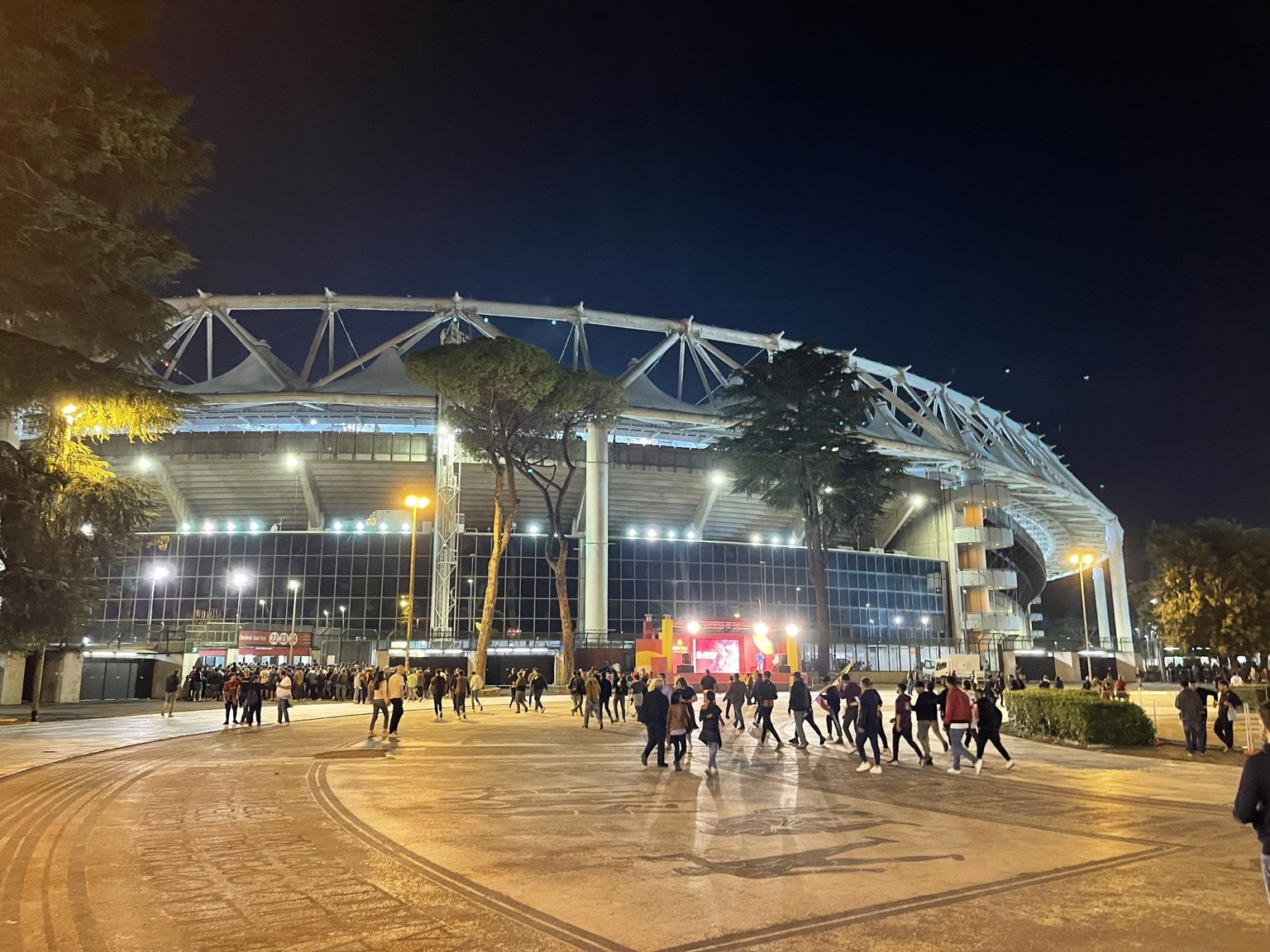
Inside the Olimpico, it matters little whether someone came from across the river, across Rome or across the world. The geography that separated them has narrowed to a seat, a section, a curva.
Then Roma plays.
For ninety minutes, the invisible map contracts to a single point.
And then the whistle blows.
The exits fill. The Foro Italico spills into motion. Pedestrians pour back toward the streets and bridges. Cars sit in traffic. Friends decide whether to wait or begin walking. Groups that arrived together separate according to where the rest of the night will take them.
The crowd becomes smaller crowds.
Smaller crowds become groups.
Groups become individuals.
The routes reappear.
Some return directly home. Others return to the places they occupied before the match. A table fills again. Another drink is ordered. The match is argued over while the traffic clears.
A victory can keep people there longer.
A defeat can empty a place quickly.
Eventually, the Foro Italico quiets. The bridges return to ordinary traffic. The bars close. The streets belong again to whatever Rome requires of them next.
Until the next match.
Then the invisible map shows itself again.
One day, the map will change.
Roma will play its last match at the Olimpico.
There will be attention paid to the obvious things. The final opponent. The final goal. The last player to leave the pitch. The supporters who remain in the stands after the whistle.
A home used for generations will become a former one.
But something larger will end beyond the gates.
Thousands of journeys will no longer have that same destination.
The bar that stood naturally along the way will no longer be “along the way.” The familiar corner will lose its waiting room status. For some, Ponte Duca d’Aosta will become simply a way across the Tiber again.
Rome will not have moved.
Roma will have.
Some traditions will survive the move. Friends will still meet. Families will still travel together.
Others will not.
The streets will still lead toward the Foro Italico. Ponte Duca d’Aosta will still cross the river. The café may still serve caffè.
But there will no longer be a match at the end of the journey.
For the first time, the invisible map of the Olimpico will belong entirely to memory.
And then Romanisti will learn another way to Roma.
The first journeys will be unfamiliar.
Different streets. Different stations. Different places to park. New stretches to walk. People will arrive too early. Others will underestimate how long the journey takes. Meeting places will be chosen because they seem convenient.
For a while, everyone will still be learning.
A new bar will be discovered.
A restaurant will become a meeting place.
A new corner will earn its status.
Then there will be another match.
And another.
The same faces will begin appearing in the same places. A table will become familiar. A particular route will begin to feel obvious.
Children will learn the journey without knowing that another generation once approached Roma differently.
Years later, some may struggle to remember why their group chose that bar in the first place.
By then, it will not matter.
The new stadio will have become home.
Around it, thousands of personal routes will have formed.
The old map will not disappear.
Another map will simply exist beside it.
A place becomes somewhere to meet.
A walk becomes the way to Roma.
No one will need to draw the new map.
Romanisti will show the way.